Peptides
KLOW vs. GLOW Peptides: What They Do, How They Are Thought to Support Healing, and How I Think About Using Them
KLOW and GLOW are two popular peptide stacks studied for tissue repair, collagen remodeling, and recovery. Here is what each peptide actually does, why angiogenesis is so misunderstood, and how I personally think about cycling them.
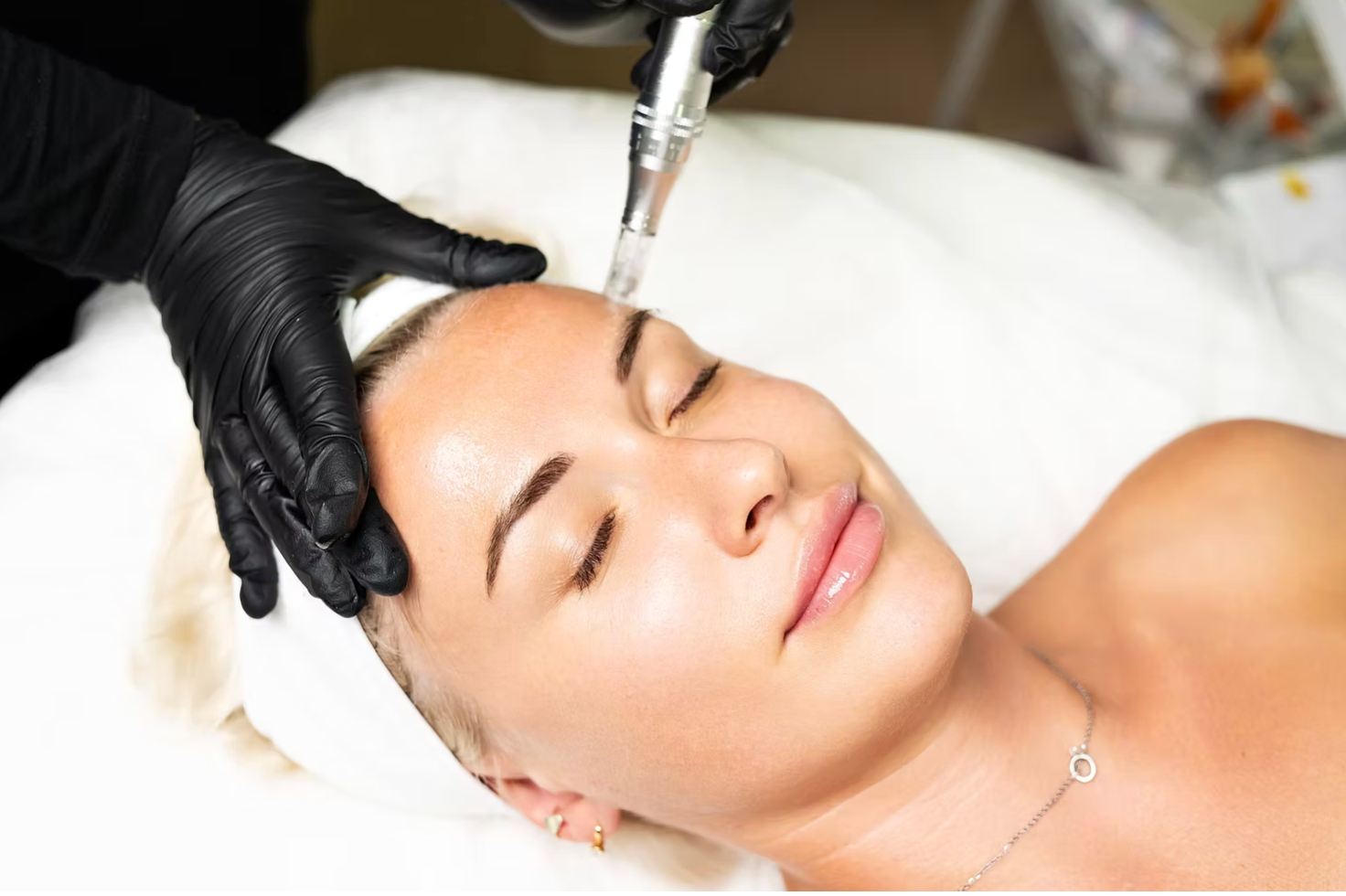
If you've spent any time researching peptides for recovery, gut health, skin quality, injury repair, or healthy aging, you've almost certainly come across two popular peptide combinations: GLOW and KLOW.
They sound similar because they are.
Before we dive in: if you're new to peptides, grab my free Longevity + Peptide Guide for a foundational rundown before reading further.
Both combine peptides studied in connection with tissue repair, collagen remodeling, cellular migration, vascular signaling, and recovery. KLOW adds one additional peptide, KPV, which brings in another layer of research related to inflammatory and gastrointestinal signaling.
But in my work with clients, I think these two stacks get oversimplified constantly online.
KLOW isn't just a "gut stack."
GLOW isn't just a "skin stack."
The biological pathways these peptides are studied in relation to play a role in how the body responds to injury, damaged tissue, inflammation, surgery, training stress, and normal tissue turnover. That's what makes them genuinely interesting from a research standpoint, and why I don't think there's a single "right" KLOW protocol that makes sense for every person.
Your goals matter. Your health history matters. Your symptoms matter. Your bloodwork matters. What you're recovering from matters.
And, importantly, the human clinical evidence for several of these peptides is still limited.
So in this article, I want to walk through what each peptide is actually studied for, why they're typically combined, why angiogenesis is such a misunderstood part of this conversation, and how my own thinking about using these stacks has evolved over time.
A quick note before we dive in: I'm a molecular and cellular biologist, longevity educator, and coach, not a physician. Nothing in this article is medical advice, and none of these peptides are FDA-approved for the wellness or recovery applications discussed here. This is research-use education, not a treatment protocol.
What Is GLOW?
GLOW typically refers to a combination of three peptides:
GHK-Cu + BPC-157 + TB-500
These peptides are studied in connection with overlapping but distinct components of the tissue repair process.
Think about what happens after an injury. Damaged tissue needs an inflammatory response to kick off repair. Cells need to migrate into the injured area. New extracellular matrix needs to be produced and remodeled. Collagen may need to be rebuilt. And critically, the recovering tissue needs blood flow.
That's where angiogenesis comes in: the body developing and remodeling blood vessels so oxygen, nutrients, and immune cells can reach healing tissue. (More on why this matters, and why it gets misrepresented online, later in this article.)
Here's how each peptide in GLOW is thought to contribute to that process.
GHK-Cu: Collagen, Extracellular Matrix, and Tissue Remodeling
GHK is a naturally occurring tripeptide that binds copper to form GHK-Cu. It's frequently marketed as a "beauty peptide," but that's a pretty narrow description of what makes this molecule interesting from a research perspective.
GHK-Cu has been studied for its potential relationship to:
- Collagen synthesis
- Elastin production
- Extracellular matrix remodeling
- Fibroblast activity
- Wound healing
- Antioxidant defense
- Inflammatory signaling
- Gene expression
Fibroblasts matter enormously here, because they're responsible for producing many of the structural components needed to rebuild damaged tissue. That's why GHK-Cu is interesting not just from a skin-aging angle, but from a broader tissue-remodeling and wound-healing perspective.
BPC-157: Tissue Repair, Vascular Signaling, and GI Biology
BPC-157 is a synthetic 15-amino-acid peptide that has generated enormous interest in the recovery and longevity space. Preclinical research has investigated it in models involving:
- Tendon and ligament injury
- Muscle injury
- Gastrointestinal damage
- Wound healing
- Vascular function
- Inflammatory signaling
- Nitric oxide pathways
- Angiogenesis
One reason BPC-157 draws so much attention is that healing isn't simply about "reducing inflammation." Damaged tissue needs an orchestrated repair response: oxygen and nutrients, cellular communication, extracellular matrix remodeling, and an adequate vascular supply. BPC-157 appears to interact with several of these processes in preclinical models, which is why interest in it extends well beyond gut health into injury recovery, post-surgical recovery, musculoskeletal healing, and exercise recovery.
The important caveat: much of the compelling BPC-157 literature is still preclinical. We shouldn't translate animal healing studies directly into guaranteed human outcomes.
TB-500: Cell Migration and the Repair Process
TB-500 is generally discussed in connection with thymosin beta-4 biology. Thymosin beta-4 participates in actin regulation, and actin is fundamental to how cells maintain their structure and move, which matters because repairing damaged tissue requires cells to migrate into the area where they're needed.
Thymosin beta-4-related biology has been investigated in areas including:
- Cell migration
- Wound healing
- Tissue remodeling
- Angiogenesis
- Inflammatory responses
- Repair following tissue damage
This potentially complements BPC-157 and GHK-Cu well within the same stack.
One important scientific distinction: studies involving endogenous or pharmaceutical thymosin beta-4 shouldn't automatically be treated as clinical evidence for every commercially available product labeled TB-500. That nuance gets lost constantly in online discussions.
What Does KLOW Add?
KLOW typically combines four peptides:
KPV + GHK-Cu + BPC-157 + TB-500
KPV is what differentiates KLOW from GLOW.
KPV: Inflammatory Signaling and the Gut
KPV (Lys-Pro-Val) is a three-amino-acid peptide derived from alpha-melanocyte-stimulating hormone. Preclinical research suggests KPV may influence inflammatory pathways, including NF-κB signaling, and it has been studied in experimental models of intestinal inflammation.
That's particularly interesting because inflammation and healing aren't separate processes. The body needs inflammation to initiate repair, but an inflammatory response that stays dysregulated can interfere with recovery. KPV potentially adds another layer to the stack by influencing that inflammatory environment, and its research history in intestinal models is a big reason KLOW has become so popular in the gut-health space specifically.
But I wouldn't reduce KLOW to a gut protocol. That undersells what it's actually doing.
KLOW Is Really a Multi-Pathway Recovery Stack
Here's a more accurate way to think about it:
- KPV → inflammatory and intestinal signaling
- BPC-157 → tissue repair, vascular, nitric-oxide, and GI pathways
- TB-500 / thymosin beta-4 biology → cellular migration, angiogenesis, and tissue remodeling
- GHK-Cu → collagen, extracellular matrix, fibroblast activity, and regenerative signaling
Those pathways potentially converge around one larger biological objective: repair and recovery.
That's why people become interested in KLOW for very different reasons. Someone might be dealing with a gastrointestinal issue. Someone else might be recovering from an orthopedic injury or surgery. Another person may be struggling with exercise recovery as they age, or primarily interested in skin and collagen quality.
Those are very different goals, which is exactly why I don't think everyone should be handed the same protocol.
Let's Clear Up the Angiogenesis Conversation
This deserves far more nuance than it usually gets on social media.
Angiogenesis means the formation of new blood vessels from existing ones, and it's an essential part of healing.
Imagine injuring a muscle. That damaged tissue needs oxygen, amino acids, immune cells, signaling molecules, and the raw materials required to rebuild itself. Blood vessels are how those resources get there. Angiogenesis is therefore part of normal wound healing, tissue regeneration, exercise adaptation, and recovery.
So when we see angiogenic signaling associated with peptides being studied for tissue repair, that isn't automatically a red flag. It may be part of the mechanism through which healing happens in the first place.
Where Does the Cancer Concern Come From?
Tumors can also hijack angiogenesis. As a tumor grows, it needs its own blood supply, just like any other metabolically active tissue, and cancer cells can manipulate pathways like VEGF signaling to stimulate that vascular growth. That's well-established cancer biology.
But here's the important logical distinction:
Cancer exploiting a normal biological pathway does not make that pathway inherently carcinogenic.
Cancer also exploits glucose metabolism, growth signaling, cell division, and inflammatory pathways, none of which we consider dangerous on their own. We shouldn't jump from "BPC-157 or thymosin beta-4-related biology may influence angiogenesis" to "these peptides cause cancer." The research doesn't support that leap.
At the same time, we don't yet have extensive long-term human safety data that lets us say every pattern of chronic use is entirely without risk. Both statements can be true simultaneously, and that's where I think this conversation should actually live, rather than at either extreme.
So How Long Should Someone Use KLOW?
This is another area where my own thinking has evolved.
I used to lean heavily toward "use these for the minimum time necessary, then stop." I don't think the evidence actually supports being that prescriptive. But I've also moved away from the opposite idea: that everyone should simply stay on a peptide indefinitely.
The honest answer is: it depends.
I realize that's far less satisfying than a neat eight-week protocol graphic. Biology doesn't cooperate with social media algorithms.
There isn't a clinically established universal KLOW schedule. Different approaches might involve periods of use followed by breaks, a longer cycle followed by time off, or periodic use tied to specific goals throughout the year.
Personally, I use KLOW roughly four times per year, but I don't have a rigid quarterly calendar where I've decided my body "needs" it every three months. That's simply the pattern I've settled into based on my own goals and experience, not a number I'm prescribing for anyone else.
Other individuals approach it differently. As examples of how varied real-world approaches can be (not as dosing recommendations), some people use structures like eight weeks on and four weeks off, while others consider it only once or twice a year.
There is no one-size-fits-all schedule.
What Should Actually Determine the Approach?
This is where personalization matters most.
The question shouldn't simply be "how often should I take KLOW?" A much better starting point is: why am I considering it in the first place?
Someone focused on temporary injury recovery has a completely different objective than someone managing chronic GI symptoms, or someone interested in tissue resilience as they age. An individualized approach should consider things like:
- The specific goal
- Current symptoms
- Health and medical history
- Genetics (histamine response, methylation, and other relevant variants)
- Medications
- Bloodwork and other biomarkers
- Previous injuries or surgeries
- Training volume and recovery capacity
- Age and overall health status
- Previous response to peptides
- Potential contraindications
- Whether there's still a reason to continue
And those variables change over time. A protocol that makes sense at one point in someone's life doesn't automatically need to become a permanent one.
Why I Recommend Getting Individualized Guidance
This is also why I'm reluctant to answer "how long should I take KLOW?" with a single number in a comment section. There isn't enough information to answer that responsibly: the right approach for one person may be completely wrong for another.
Because many of these peptides still have limited human clinical data and aren't FDA-approved for the wellness and recovery uses commonly discussed online, I think working with a qualified provider who understands peptide biology and your full health history is the best approach whenever possible.
Education is incredibly valuable. But education and individualized medical decision-making are not the same thing, and I want to be clear about that distinction every time I write about this topic.
My Personal Experience With KLOW
My own interest in KLOW originally came from gut health. For years I struggled with bloating, digestive issues, IBS, food intolerances, and significant rosacea — issues that became especially frustrating during perimenopause. I spent thousands of dollars on functional testing, practitioners, and supplements, and I made real progress.
Then I needed a round of antibiotics for an unrelated issue, and it undid a lot of that progress. My gut symptoms flared right back up. That setback is actually what led me to KLOW.
Within about a week of starting, I noticed a substantial improvement in bloating and digestion. Over time, I was able to reintroduce vegetables, fiber, and foods I'd previously struggled to tolerate. My skin has never looked better, and my rosacea improved meaningfully too. That wasn't the reason I started KLOW, but it's a side benefit I very much appreciate. I wish I had tried it sooner. KLOW wasn't the only tool in the mix — I paired it with other pieces of my protocol, including nervous system regulation work, since gut symptoms are so closely tied to the nervous system.
That's what initially sold me on continuing to explore it. But today, I don't think about KLOW solely as a gut tool. I think about it more broadly as one part of my recovery and longevity strategy overall.
Important caveat: this is my n=1 experience. It doesn't establish that KLOW will produce the same outcomes for anyone else, and it doesn't replace controlled human research.
The Bottom Line
KLOW and GLOW aren't simply "beauty peptides" or "gut peptides." They're combinations built around biological pathways involved in repair, inflammation, collagen production, cellular migration, vascular signaling, and tissue remodeling — and angiogenesis belongs squarely in that conversation.
Rather than treating angiogenesis as inherently dangerous, it's worth recognizing that new and remodeled blood vessels are part of how damaged tissue receives what it needs to heal. Cancer can exploit that same pathway, but that doesn't mean angiogenesis causes cancer, and it doesn't establish that peptides influencing angiogenic signaling cause cancer either. The larger honest answer is that we still don't have robust long-term human data to answer every question about these compounds.
That's why my philosophy has shifted away from both extremes. I don't believe everyone needs to use KLOW for the bare minimum amount of time. I also don't believe everyone should stay on it indefinitely. There is no universal KLOW protocol.
I personally use it about four times a year, but that reflects my own biology, goals, and experience, not a protocol for you to copy. Someone else's goals, symptoms, health history, bloodwork, injuries, recovery needs, and risk profile may point toward an entirely different approach.
And that's ultimately how I think we should approach peptides as a category: understand the biology, understand why you're using them, personalize the strategy, and don't confuse someone else's protocol with your own.
Want personalized guidance on whether a peptide protocol fits your goals, history, and bloodwork? Book a session with me here.
Where I source my peptides: I get my KLOW through EllieMD, a physician-directed telehealth platform using 503A-compounded formulations. If you're focused more narrowly on tissue and injury recovery rather than the full KLOW stack, EllieMD also offers the BPC-157/TB-500 "Wolverine stack", also physician-guided and 503A-compounded.
Educational & Informational Use Only: This content is intended for general educational purposes and reflects research literature and personal experience. It is not medical advice, and it is not intended to diagnose, treat, cure, or prevent any disease.
Research Use Only: The peptides discussed in this article are not FDA-approved for the uses described and are provided for informational and research-context purposes only.
Individual Results Vary: Personal experiences described in this article, including my own, are anecdotal and will not necessarily reflect the outcomes of any other individual.
Written by
Dr. Kristi Sawicki
Ph.D., Molecular & Cellular Oncology — George Washington University. Women's health strategist specializing in peptide science, genomics, and metabolic longevity.


